I. Introduction: The Studio Apartment Paradox
In 2026, studio apartment zoning has become the make-or-break skill for modern renters. A studio looks like freedom at first because it is open, bright, and simple. However, without clear zones, it quickly turns into a bedroom with a fridge and a desk squeezed into the corner. Consequently, the space feels messy, smaller, and more stressful than it should.
Moreover, traditional fixes like walls, bookcases, or folding screens block light and eat up floor space. As a result, they solve one problem while creating another. For instance, you gain privacy but lose air and flow. This is a common hurdle in open plan studio layout ideas.
Furthermore, the modern solution is smarter. Instead of building walls, designers now rely on studio apartment zoning using “invisible walls.” This means rugs and lighting work together to define areas without closing anything off. In this guide, you will learn how to use these tools to create a luxury flex room. Most importantly, all of these small space hacks are renter-friendly and budget-aware.
II. The Psychology of “Invisible Walls”
Specifically, our brains love visual signals to understand how to behave in a room. When we see a soft rug and warm light, we relax. When we see cooler light and a clean edge, we focus. Consequently, studio apartment zoning works because it guides your behavior without any physical effort.
Moreover, the 2026 trend moves away from hard dividers. People want flow, not boxes. For instance, instead of a wall saying “this is work,” a change in lighting temperature can do the same job. This is a vital concept in learning how to define spaces in a studio apartment.
Furthermore, when you master these invisible boundaries, you reduce mental clutter. Sleep feels deeper because you aren’t staring at your “office.” Work feels sharper because you are in a designated zone. As a result, your small space starts acting like a full-sized home.
III. Zoning with Rugs: The “Anchor” Technique
1. The Rule of Scale in Studio Apartment Zoning
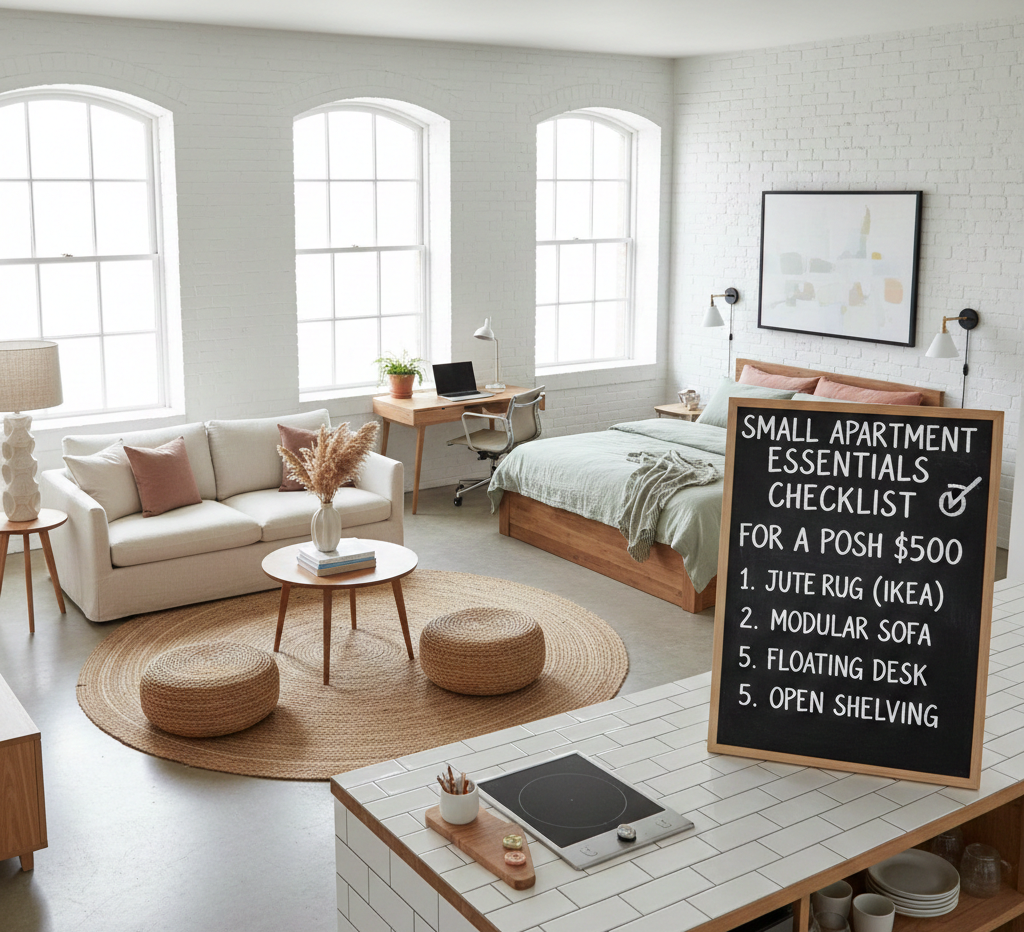
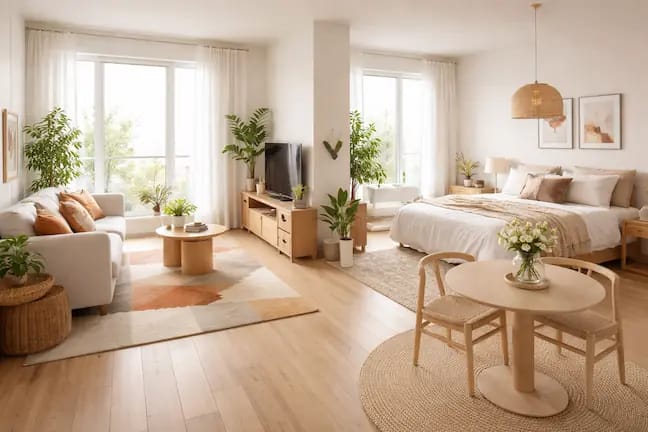
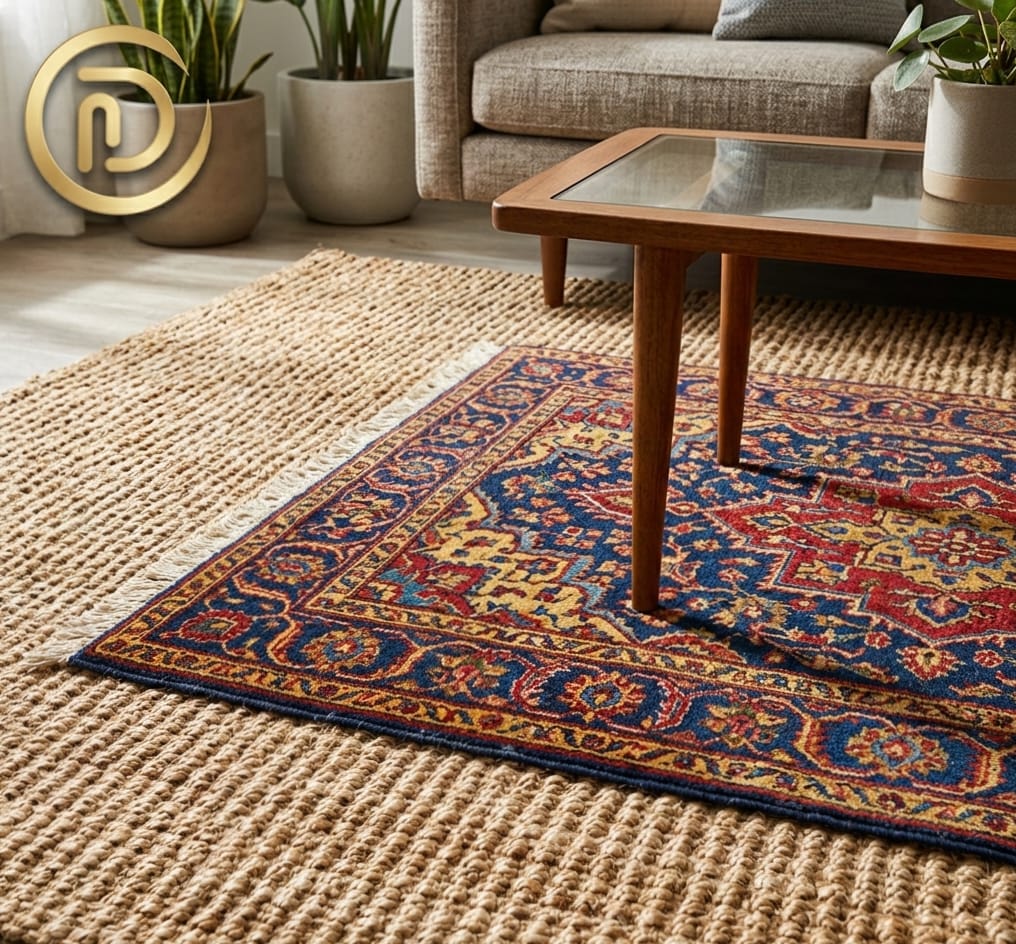
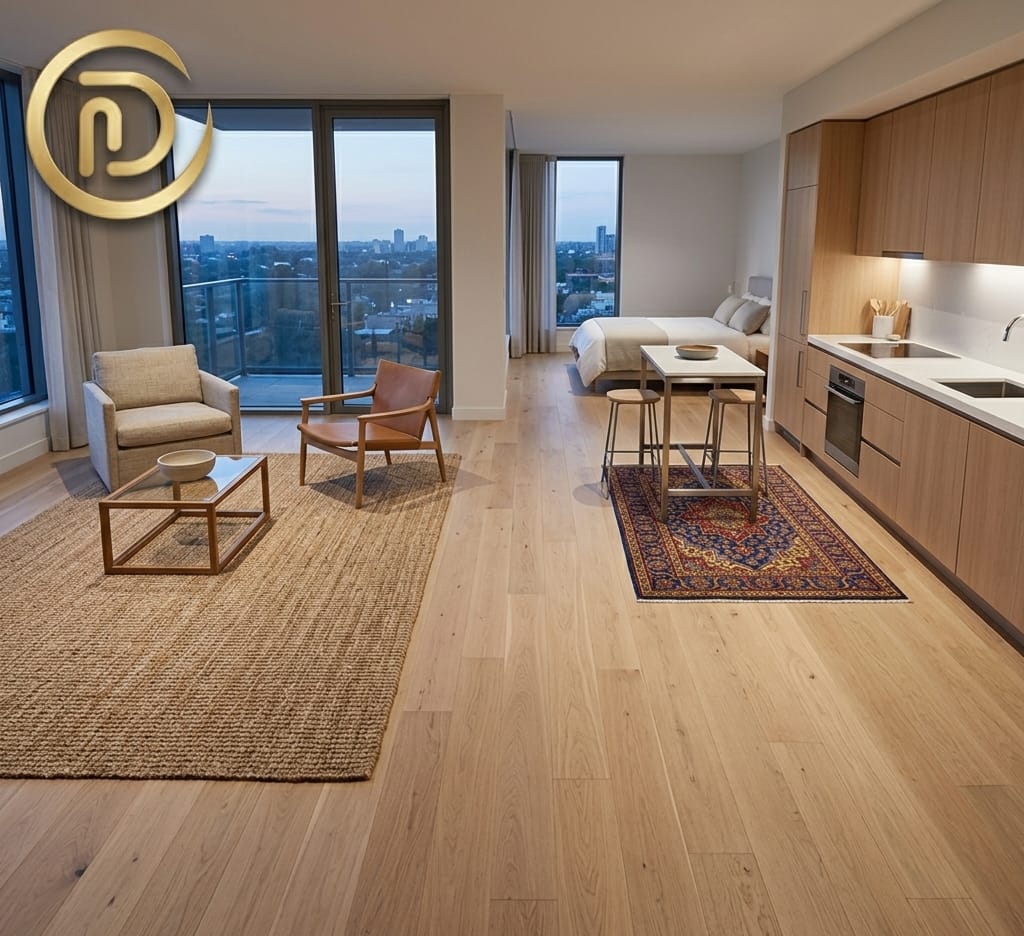
Specifically, one oversized rug across the whole studio is a common mistake. It erases boundaries and makes the room feel flat. In studio apartment zoning, the goal is separation. Consequently, three well-sized rugs work better than one giant rug. For instance, use one rug for the living zone, one for the dining nook, and one to isolate the bed. According to design experts at Architectural Digest, defining floor boundaries is the fastest way to organize an open floor plan.
2. Texture Contrast for Studio Apartment Zoning
Furthermore, texture matters as much as size. A jute or sisal rug signals activity and movement. A plush or shag rug signals rest. Consequently, your brain reads these rugs as room dividers instantly. For instance, use a flat-weave rug for the living area and a soft pile rug for sleeping.
3. The “Dime” Tip for Luxury on a Budget
Specifically, you should layer your rugs. Place a small, high-quality vintage rug over a large, neutral jute base. Moreover, this creates depth and luxury. This is one of the best studio apartment layout hacks 2026 for renters who want style without a high price tag.
IV. Zoning with Lighting: The “Spotlight” Strategy
1. Vertical Breaks in Studio Apartment Zoning
Specifically, lighting defines space from above. A pendant light visually lowers the ceiling over a table. Consequently, it creates a “room” without walls. In studio apartment zoning, this vertical break is powerful because it keeps floor space open. This is a key part of our small space hacks for renters.
2. Color Temperature Zoning
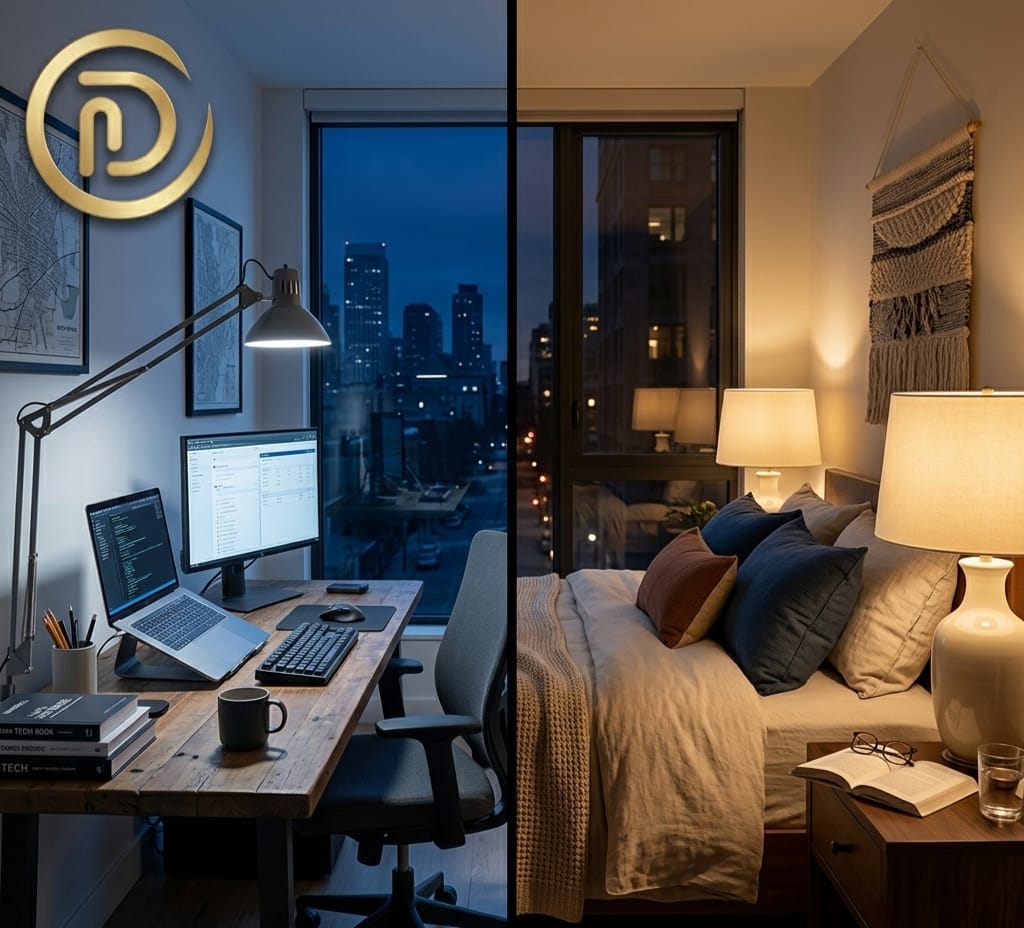
Furthermore, light color changes mood. This is critical for zoning with lighting. For instance, use:
- 4000K (Cool White) for your desk to boost focus.
- 2700K (Warm White) for your bedside to encourage sleep.
As a result, your body knows exactly what each zone is for. You can find more about the science of lighting at the Sleep Foundation.
3. The Renter-Friendly “Dime” Hack
Specifically, you should avoid expensive rewiring. Use plug-in sconces and smart bulbs instead. Moreover, smart bulbs let you change the tone of a room with an app. Consequently, you get luxury control without needing landlord approval.
V. Mastering Negative Space: The 2026 Secret
Specifically, the biggest mistake in studio apartment zoning is overcrowding your zones. To make a small home feel like “Budget Luxury,” you must embrace Negative Space. This refers to the empty areas between your rug islands.
Consequently, if you jam your furniture right up against the edges of your rugs, the room feels suffocated. Moreover, leaving “breathing room” around your rugs allows the floor to act as a natural hallway. Furthermore, this empty space makes your furniture look like a curated gallery rather than a storage unit.
VI. Visual Continuity: The “Common Thread” Rule
Furthermore, you must maintain Visual Continuity so the zones don’t look like random patches. For instance, repeat the same neutral tone or metallic finish in your rugs and pillows across all zones. If the bedroom feels like a different universe than the kitchen, the apartment feels disjointed.
As a result, a cohesive color palette ensures the studio feels like chapters in one book rather than random pages. This is the most effective way to handle open plan studio layout ideas without losing that high-end, intentional vibe.
VII. Creating the Bedroom Nook Without a Wall
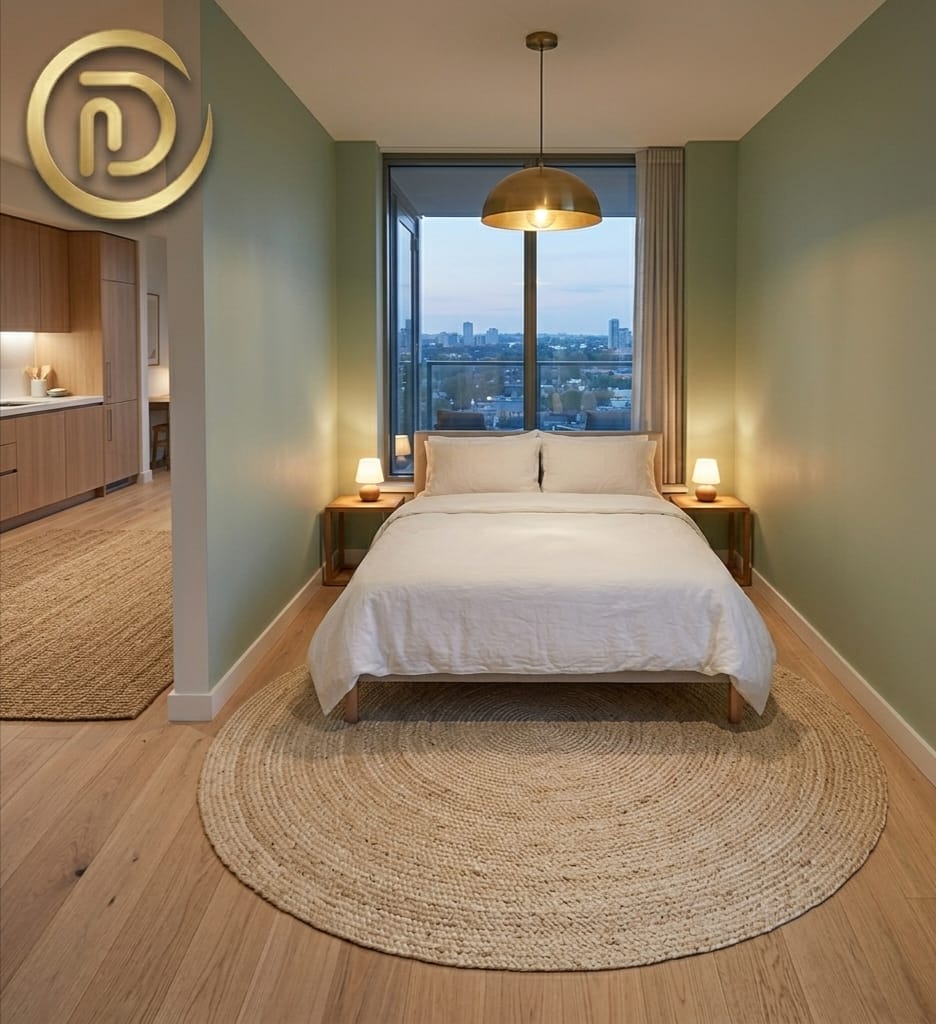
Specifically, the bed needs emotional privacy, not a brick wall. In studio apartment zoning, this is done with shape. Moreover, place a circular rug under the bed to break the square lines of the room. Consequently, the bed feels like a separate, calm island.
Furthermore, keep your colors consistent. Just like we discussed in our guide on living room layout mistakes, repeating a color story across a small space creates harmony. As a result, the studio feels intentional and balanced.
VIII. The “Dime” Layout Audit: Flow and Function
Specifically, your zoning should never block movement. Walk through your space to ensure rugs do not overlap awkwardly. Consequently, check that you can move from the bed to the kitchen in a straight line. Moreover, testing your paths protects the flow of your studio apartment zoning.
Furthermore, use mirrors wisely. Place a mirror where it reflects a light zone. As a result, the space feels doubled and much brighter. This is a classic small space hack that adds instant polish for zero cost.
IX. Maintenance: The “Rug Line” Rule
Specifically, you must respect the rug line. If an item crosses into another zone, it is officially clutter. For instance, if your work laptop ends up on the “bedroom island,” your mental boundary is broken. Consequently, doing a quick daily reset keeps your studio apartment zoning effective and clear.
Moreover, regular maintenance ensures your “invisible walls” remain strong. If your dining rug is covered in laundry, the zoning fails. Furthermore, keeping the negative space clear of shoes and boxes preserves the luxury feel. This is the “Dime” way to maintain a high-end home on a budget.
X. Conclusion: Small Space, Big Sophistication
Specifically, you do not need walls to live a luxurious life. Moreover, with the right rug and the right light, your studio becomes a flexible, multi-room home. Consequently, studio apartment zoning turns your space limitations into a design power. By prioritizing texture and glow over wood and drywall, you create a home that feels open, intentional, and expensive.
XI. People Also Ask (SEO FAQ)
How many rugs are too many in a studio?
Specifically, three is the sweet spot for studio apartment zoning. More than that makes the floor look busy and cluttered.
What lighting is best for defining a kitchen zone?
Moreover, pendants or track lighting with cooler bulbs work best. They create a “bright boundary” that separates cooking from relaxing.
Can I use rugs on carpet in a rental?
Consequently, yes. Use a flat-weave rug on top of the carpet to add structure and define your studio apartment zoning without shifting.
Budget-Friendly Implementation Checklist
- Use rugs as room dividers to save floor space.
- Install smart bulbs for instant zoning with lighting.
- Layer affordable rugs with small statement pieces.
- Follow the small space hacks discussed to keep the flow open.