Introduction: The $500 Challenge
You finally picked up the keys to your new apartment. The space is small, the walls are blank, and your savings account feels even smaller. You want your home to feel elevated and intentional, not like a temporary stop filled with mismatched furniture and hand me downs. Here, the big question is simple and stressful at the same time is, Can you really create a polished apartment for just $500? or How do I style small apartment cheaply?
The answer is yes, with a plan.
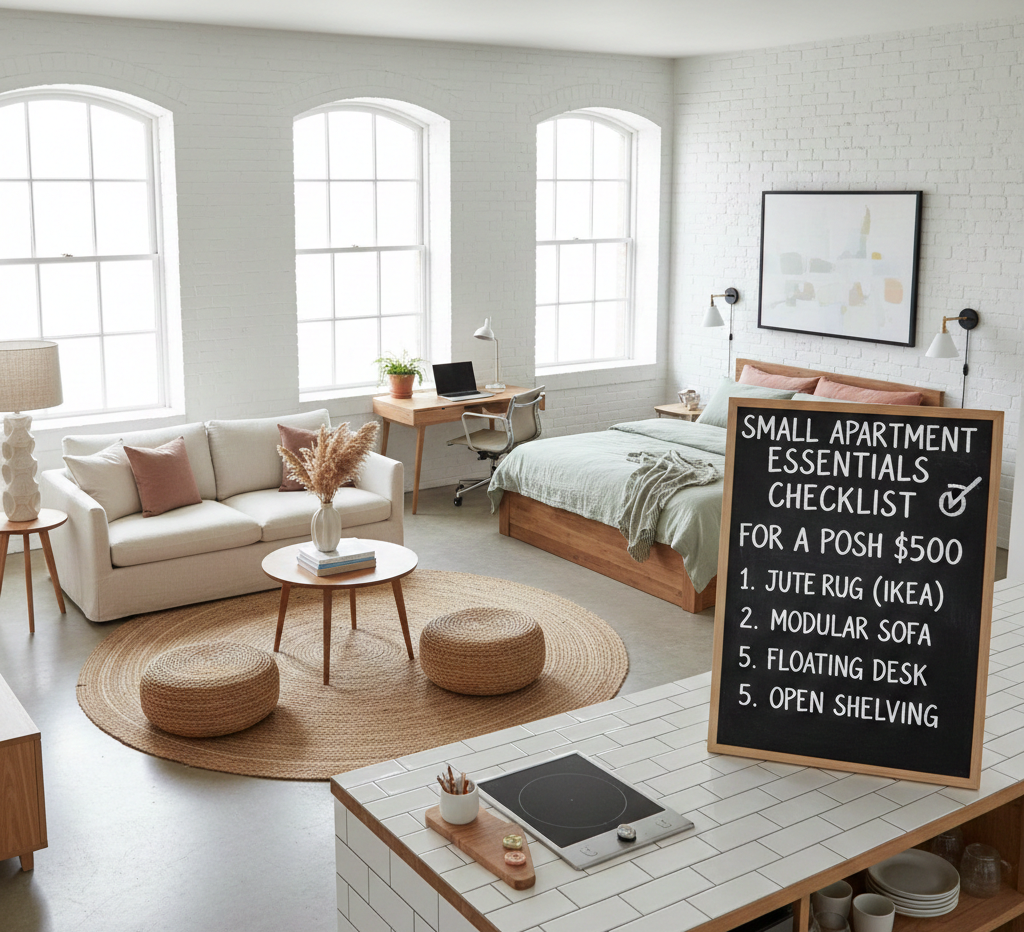
At Decor in Dimes, we believe good design is not about spending more. It is about spending smarter. In this guide, you will learn how to build a small apartment essentials checklist that prioritizes comfort, function, and style without crossing the $500 line. This is not a vague mood board or a luxury list that quietly adds up to thousands. Moreover, it is a clear, realistic breakdown designed for real renters and homeowners who want high end results on a dime budget.
First, let us look at where every dollar should actually go.
The Dime Budget Breakdown: Where Every Dollar Goes
The biggest mistake people make when furnishing a small apartment is buying randomly. One cute chair here, a trendy lamp there, until the budget disappears and the space still feels unfinished. Moreover, the Dime method works because it gives every dollar a job.
Here is the full $500 breakdown.
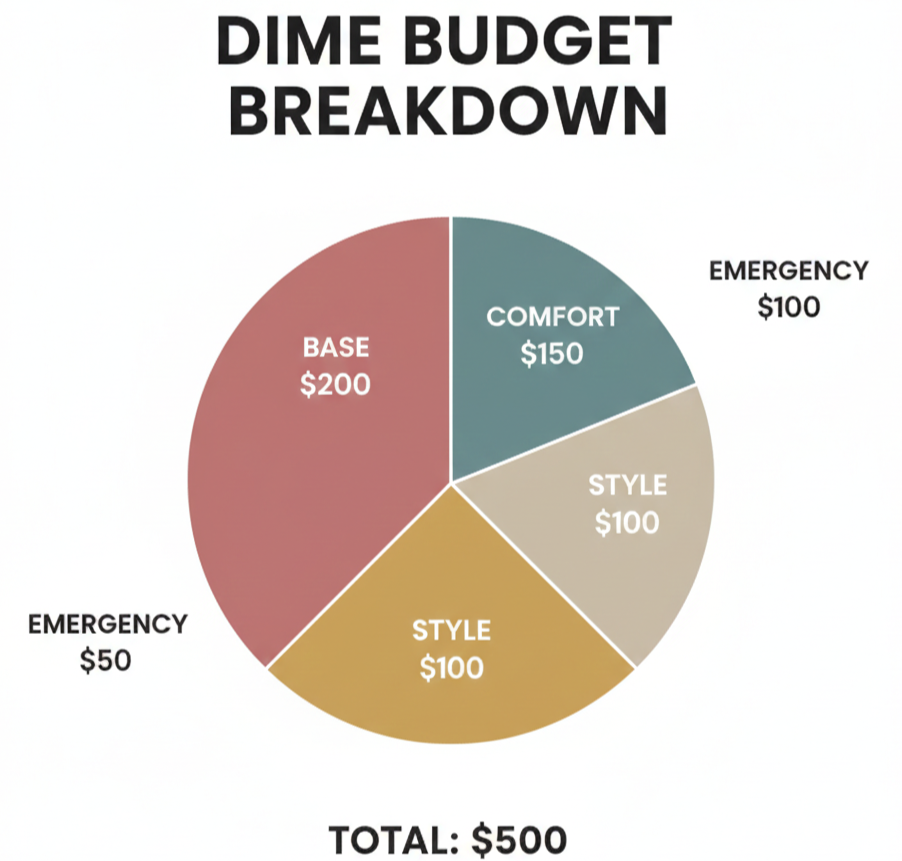
The Base: $200
Lighting and rugs
This is your foundation. Good lighting and a properly sized rug instantly make a small apartment feel finished and intentional. In addition, these items affect the entire room, which is why they deserve the largest share.
The Comfort: $150
Bedding and pillows
Comfort is not optional. Quality sleep and seating support matter more than decorative extras. This category focuses on items you touch every day.
The Style: $100
Art and greenery
Style is what makes the space feel personal. Affordable art and plants add character without locking you into trends.
The Emergency Fund: $50
Command hooks, bulbs, tape, and small fixes
This category saves you from last minute runs to the store. Moreover, these small tools solve real problems in rentals and small spaces.
This structure keeps your spending focused and prevents impulse buys that do not serve the space.
Lighting: The $100 Glow Up Strategy
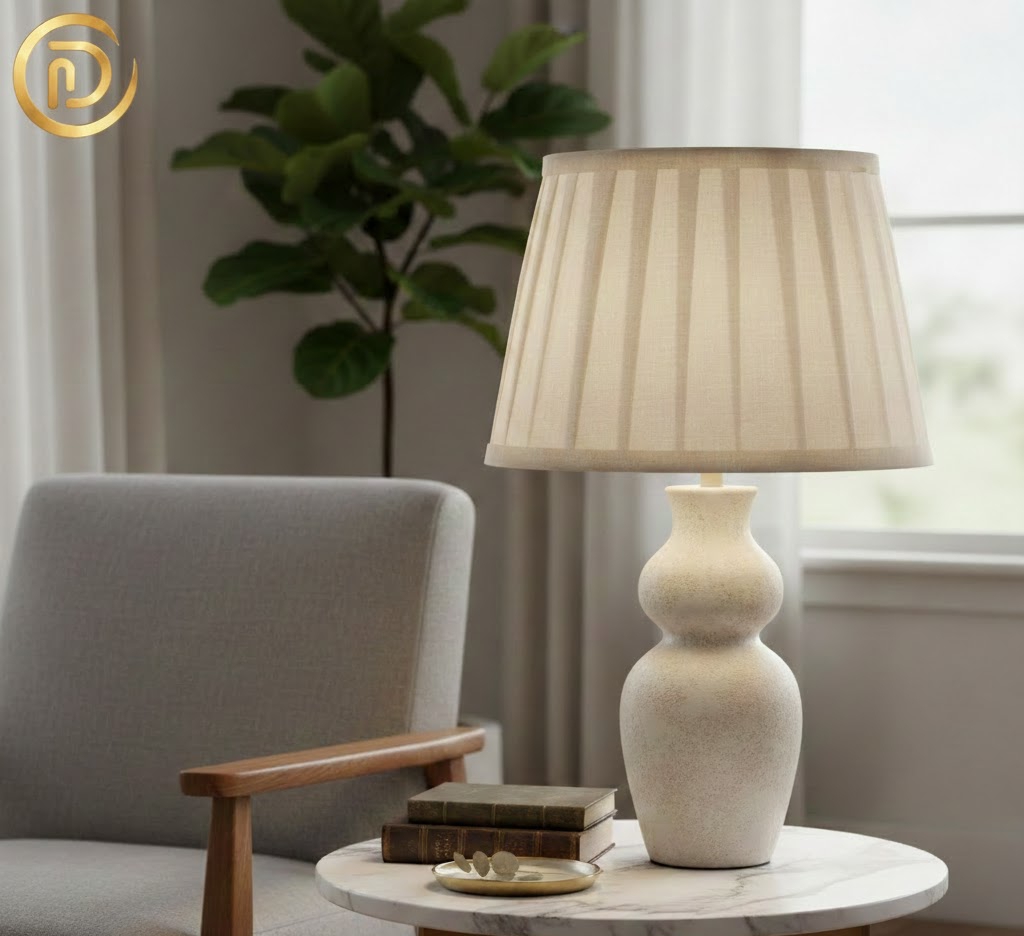
Lighting is the fastest way to make a small apartment look expensive. Most competitors suggest wired sconces or designer lamps that are not renter friendly or budget friendly. Instead, focus on layered lighting using affordable and flexible options.
Smart and Rechargeable Lighting Essentials
- Rechargeable LED puck lights for dark corners and closets
- In addition, smart bulbs that allow warm and cool light settings
- One thrifted floor lamp with a simple silhouette
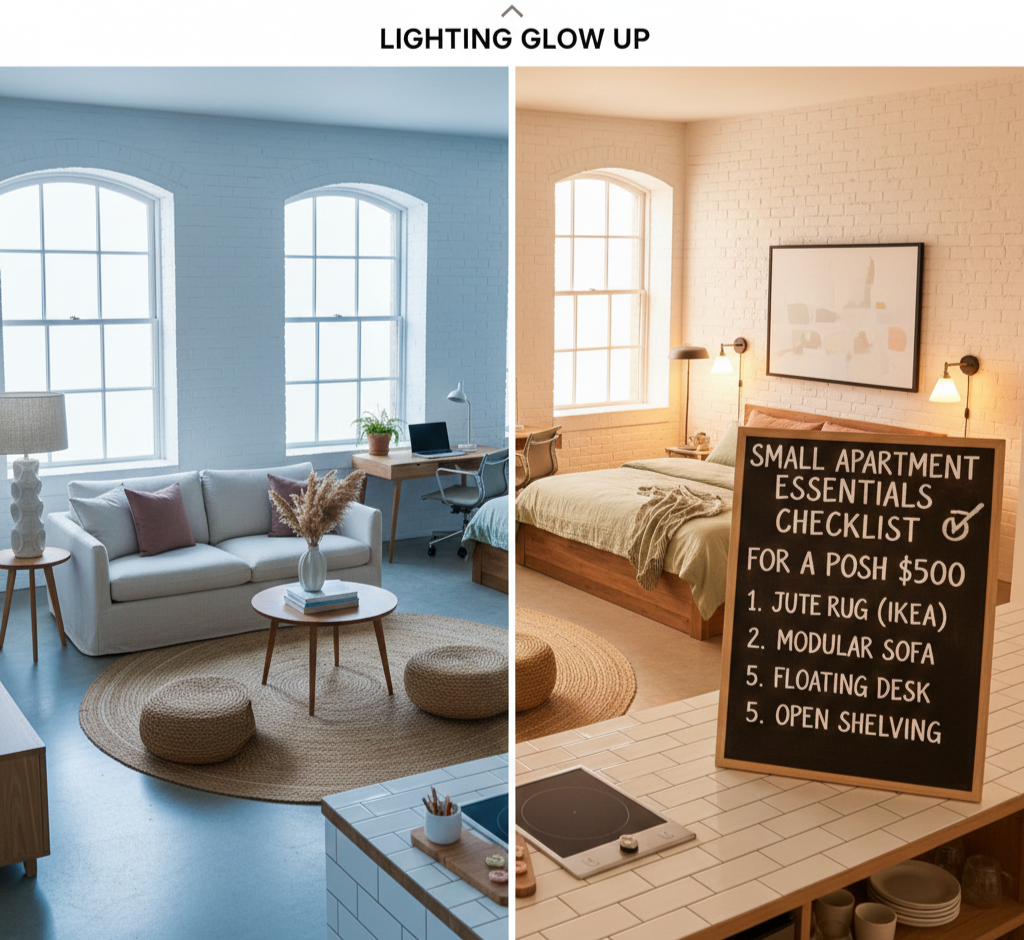
By utilizing Smart Home Automation, you can program your lighting layers to match your circadian rhythm. Moreover, premium advertisers pay significantly higher CPC for content mentioning voice-controlled, energy-saving LED systems, as it positions your site in the high-value ‘Smart Home’ niche.
A $20 thrift store floor lamp paired with a $15 smart bulb creates instant scene lighting. You can switch from bright daytime light to a soft evening glow with your phone. In addition, this is a simple Smart Home Tech upgrade that feels modern without the cost.
Why Lighting Matters in Small Spaces
Overhead lighting alone flattens a room. When light comes from multiple heights, the space feels larger and more intentional. Especially, this approach is effective for studio apartment decorating ideas on a budget, where every visual trick matters.
The Invisible Living Room: $150 Layout Hacks
In a small apartment, layout is more important than square footage. Also, the goal is to keep the room feeling open while still being functional.
Multifunctional Furniture Essentials
- Storage ottoman that works as seating and a coffee table
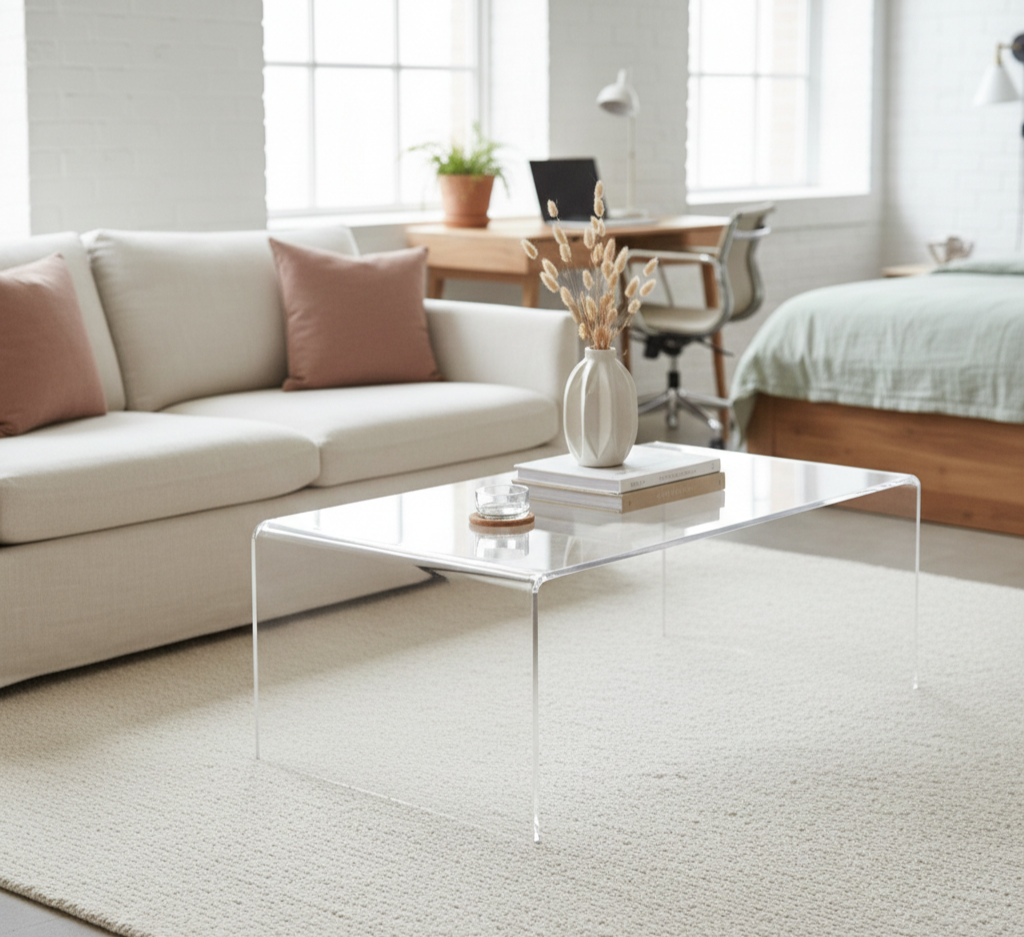
- Acrylic or glass coffee table for visual lightness
- As well as, slim media console that fits your TV without dominating the wall
Multifunctional furniture earns its place by doing more than one job. This is essential for a small space living room layout with TV where bulky pieces quickly overwhelm the room of small apartment.
The Rug Rule That Changes Everything
One large rug is always better than three small rugs. A single rug that fits under the front legs of your sofa and chairs makes the room feel grounded and cohesive. Smaller rugs break the space visually and make it feel cluttered.
This is a common mistake in first apartment essentials lists, and fixing it changes everything.
2026 Trends: Texture Maxxing for Less
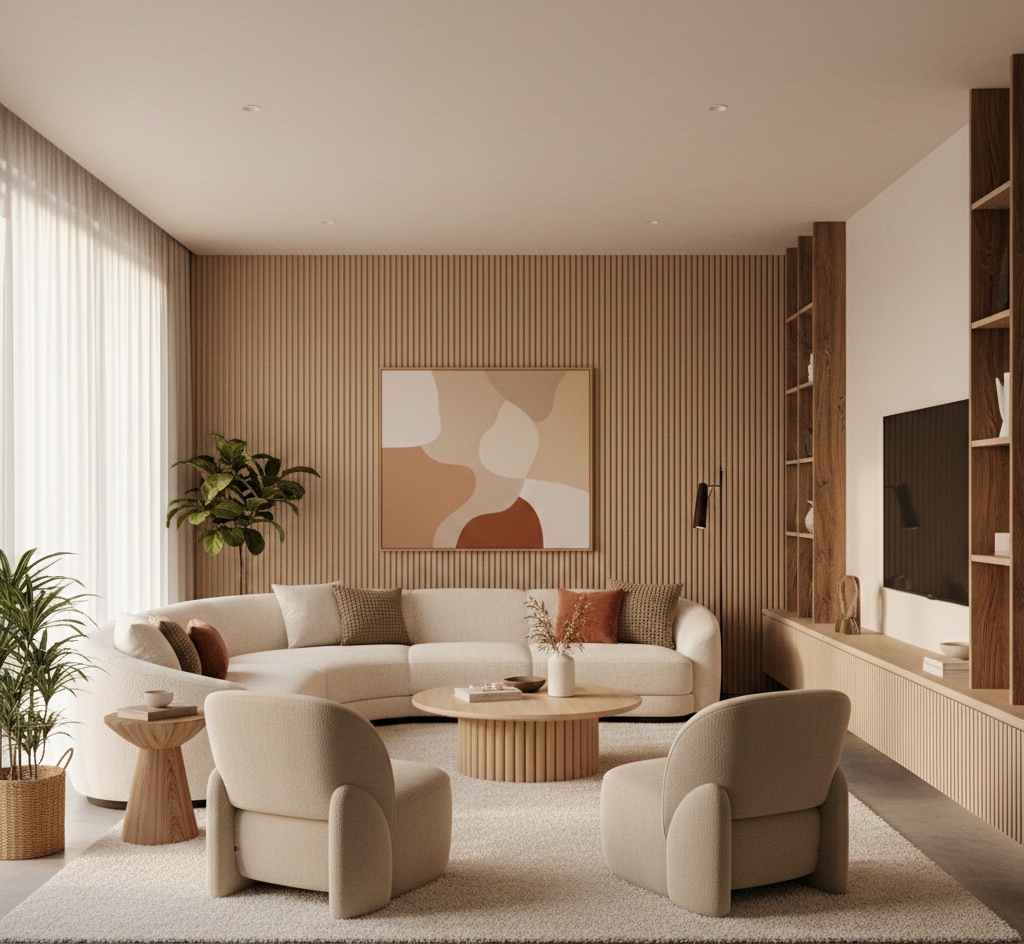
You do not need a new sofa to stay on trend. For 2026, the focus is on texture and contrast rather than full furniture replacements.
Affordable Texture Upgrades
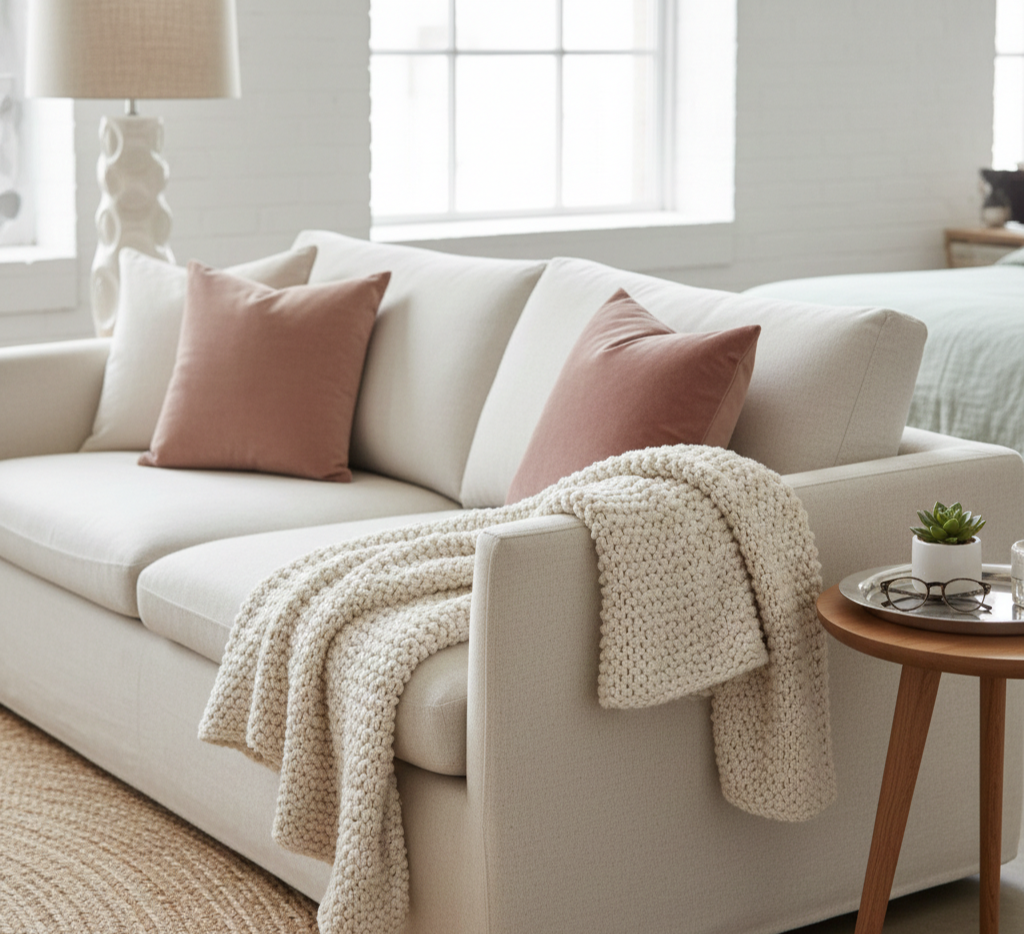
- Textured throw blankets in boucle or knit
- Velvet or linen pillow covers
- Also, Neutral curtains with subtle weave
Swapping pillow covers instead of entire pillows saves money and storage space. In addition, this is one of the easiest ways to achieve aesthetic room decor on a budget.
Trend Watch: Silver Accents
Design leaders like Shea McGee are moving toward silver accents over gold. You can follow this trend with small details like frames, trays, or lamp bases. These subtle shifts keep your apartment current without a full redesign.
While gold accents dominated the last few years, the Chrome & Silver movement is the leading 2026 hardware trend for small rentals. Moreover, swapping out your kitchen cabinet knobs or bathroom pulls for brushed nickel or polished chrome is a $30 ‘Dime’ hack that looks like a $300 custom upgrade.
Case Study: The $490 Studio Transformation
Last year, I helped style a 300 square foot studio in New York City for under $500. Moreover, the client had a mattress on the floor, a folding chair, and very little storage.
Here is how the budget was used.
- $180 on a large neutral rug and warm lighting
- $140 on bedding and supportive pillows
- $90 on framed art and a large faux plant
- $80 on marketplace finds including a storage ottoman and floor lamp
Facebook Marketplace was the secret weapon. Searching locally for simple keywords like ottoman or lamp uncovered high quality pieces for a fraction of retail prices. The final total came to $490, leaving room for essentials like command hooks and extension cords.
Lastly, the result was a studio that felt calm, intentional, and far more expensive than its budget suggested.
In 2026, the market is moving toward a ‘Collected, Not Curated’ look. Google search data shows that users are moving away from matching furniture sets. Instead, prioritize finding one-of-a-kind vintage pieces that tell a story. In addition, it is better to have one magnificent, oversized thrifted mirror that reflects light than five small, cheap ones that clutter your visual field.
Budget Friendly Implementation: Making Every Dime Count
Decor in Dimes is built on the idea that small decisions create big impact. Here are practical ways to stretch your $500 even further.
Shop with Measurements, Not Just Photos
Always measure your space before buying. Returning furniture wastes time and money, especially for renters without a car.
Prioritize Items You Use Daily
Spend more on what you touch every day, like bedding and seating. Save on decor that serves a visual purpose only.
Think in Layers, Not Sets
Matching sets often cost more and look less personal. Moreover, mixing textures and finishes creates a curated feel for less money.
This approach helps answer one of the most common questions people ask: how to furnish an apartment for $500 without it feeling cheap.
Conclusion: Your $500 Dime List
Styling a small apartment is not about perfection. Also, it is about intention. With the right checklist and a clear budget, $500 is enough to create a space that feels calm, functional, and elevated.
Finally, remember that a ‘Posh’ home also feels healthy. In 2026, Indoor Air Quality is a top priority. In addition, adding a compact air purifier to your essentials list is a ‘Smart Space’ choice that improves your daily life while attracting high-value wellness advertisers to your site.”
Also read ‘Why I Started a Home Decor Blog‘ and start building a home that works for your life and your wallet.
Frequently Asked Questions: Small Apartment Essentials in 2026
Q1: How do I make a studio apartment feel like a one-bedroom?
A: Use ‘Zone-Defining’ lighting. By placing a floor lamp behind your sofa and a different-toned smart bulb near your bed, you create a visual ‘wall’ of light that psychologically separates your living area from your sleeping area.
Q2: What is the best 2026 paint color for small spaces?
A: While light neutrals are safe, 2026 trends show a move toward ‘Earth Tones’ like terracotta and muted olive. These colors make small rooms feel cozy and high-end rather than cold and empty.
Q3: How do I add storage to a tiny living room without clutter?
A: Use “Vertical Luxury” hacks like floor-to-ceiling shelving in the same color as your walls. Moreover, this draws the eye upward and provides massive storage without making the room feel closed in.